AI Evolution8 min read
2024: The Year AI Gets Practical
After a year of breathless hype, enterprise AI is shifting from impressive demos to production deployments. Here's what regulated industries need to know.
Read perspective

All insights
Recently developed

AI can accelerate delivery only when intent, boundaries, evidence and failure behavior are explicit enough to govern the work.
Read field note
An AI-native lifecycle changes the system of work around evidence, review gates and accountability.
Read perspective
Generated tests create value when they challenge behavior, boundaries and failure using an independent definition of correctness.
Read field note
As generation accelerates, review capacity, architecture coherence and accountable judgment become the constraints that matter.
Read perspective
Tool use, memory and autonomy become enterprise capabilities only when identity, permissions, evidence and interruption are designed together.
Read field note
The safest use of coding agents in mature systems begins with context recovery, a focused change and a tested path back.
Read field note
Reliable AI depends less on how much information is available than on how well the right evidence is selected, compressed and kept current.
Read perspective
The product opportunity in CloudOps AI is a governed loop connecting live state, diagnosis, design, cost, security and controlled change.
Read perspectivePerspective series
AI Evolution
After a year of breathless hype, enterprise AI is shifting from impressive demos to production deployments. Here's what regulated industries need to know.
Read perspectiveThe evolution from standalone AI chatbots to embedded copilots is reshaping how enterprise work gets done.
Read perspectiveThe EU AI Act is no longer theoretical. Organizations in banking, insurance, and healthcare face a critical question: build guardrails now or scramble to retrofit them later.
Read perspectiveLarge language models are impressive, but they don't know anything about your organization. Retrieval-Augmented Generation promises to bridge that gap.
Read perspectiveFor years, AI has been a conversation partner—you ask, it answers. Agentic AI represents something fundamentally different: AI that doesn't just respond but acts.
Read perspectiveYou can't manage what you can't measure. As AI systems become central to enterprise operations, the ability to observe, monitor, and understand their behavior becomes critical.
Read perspectiveFor years, RPA, IDP, process mining, and AI were separate disciplines with separate vendors. That era is ending. The convergence into unified platforms is reshaping enterprise automation.
Read perspectiveIn January 2024, we predicted practical AI adoption in regulated industries. Twenty-one months later, what actually happened? Here's our honest assessment.
Read perspectiveTwo years ago, we declared 2024 the year AI gets practical. It was. Now a more profound transformation is underway: the emergence of the agentic enterprise, where AI doesn't just assist workers—it becomes a category of worker itself.
Read perspectiveCloud Engineering
Building robust AWS foundations for regulated industries—landing zones, account structures, and architectural patterns that scale securely.
Read perspectiveProduction patterns for Lambda, Step Functions, and event-driven architectures—lessons from scaling serverless in regulated enterprises.
Read perspectiveBuilding production AI applications on AWS—from managed services to self-hosted LLMs, GPU instance selection, guardrails implementation, and emerging patterns like MCP.
Read perspectiveAutomating security controls and compliance evidence on AWS—from threat detection to audit-ready documentation for regulated industries.
Read perspectiveAzure Landing Zones provide the architectural foundation for enterprise cloud adoption—but implementing them in regulated industries requires more than following Microsoft's reference architectures. Here's how we approach Azure foundations for organizations where security and compliance aren't optional.
Read perspectivePlatform engineering has moved from buzzword to business imperative. The goal is simple: reduce cognitive load for development teams while maintaining the governance that enterprises require. Azure offers multiple paths to this destination—choosing the right one depends on where your organization sits on the maturity curve.
Read perspectiveAzure's AI infrastructure has matured rapidly. Between Azure OpenAI Service, the Model Catalog, and GPU compute options, enterprises now have multiple paths to production AI. The challenge isn't access to models—it's building the infrastructure patterns that make AI applications reliable, secure, and cost-effective.
Read perspectiveAI workloads introduce security challenges that traditional cloud security models weren't designed to address. Prompt injection, model poisoning, data exfiltration through generated content—these threats require new thinking about how we protect enterprise systems. Azure's security tooling has evolved to meet these challenges, but implementation requires understanding both the new threat landscape and the compliance implications.
Read perspectiveData Engineering
From shiny new tools to battle-tested platforms—how enterprise data infrastructure finally grew up.
Read perspectiveThree years after Zhamak Dehghani's seminal work, what's actually working in enterprise data mesh implementations?
Read perspectiveYour AI initiatives are only as good as your data. Here's what "AI-ready" actually means for enterprise data platforms.
Read perspectiveBatch was the default. Now real-time is expected. How streaming architectures became table stakes for modern enterprises.
Read perspectiveProject Management
When your developers have AI copilots and your estimates are based on human-only velocity, something has to change.
Read perspectiveOnshore, offshore, nearshore, remote—modern teams span time zones and cultures. Here's what actually works.
Read perspectiveMoving from hours billed to value delivered—why the shift is happening and how to make it work.
Read perspectiveYour team now includes AI assistants. Managing them requires new skills—and a new understanding of what "team" means.
Read perspectiveCompliance
The decision to seek ISO 27001 certification wasn't about checking a box. It was about building a security culture that would scale with our growth.
Read perspectiveEveryone claims to be "SOC 2 compliant." But the difference between Type 1 and Type 2—and between a report and actual security—matters more than most realize.
Read perspectiveThe payment card security standard received its most significant update in years. Here's what changed, why it matters, and how we approached our transition.
Read perspectiveHow certifications open doors, build trust, and create genuine differentiation—lessons from three decades of serving regulated industries.
Read perspectiveFrom active delivery
A quick tip on provisioned concurrency that saved a client from cold start timeouts in production.
Read the complete field noteFive signs a process isn't ready for automation—spotted in the first 30 minutes of discovery.
Read the complete field noteCommon chunking mistakes that make your enterprise search return irrelevant results.
Read the complete field note
The warehouse auto-suspend setting that accounts for 40% of unexpected Snowflake bills.
Read the complete field noteHow we automated 80% of evidence collection using tools you already have.
Read the complete field noteA simple pre-UAT checklist that reduced our client escalations by 60%.
Read the complete field notePublished by Primus experts
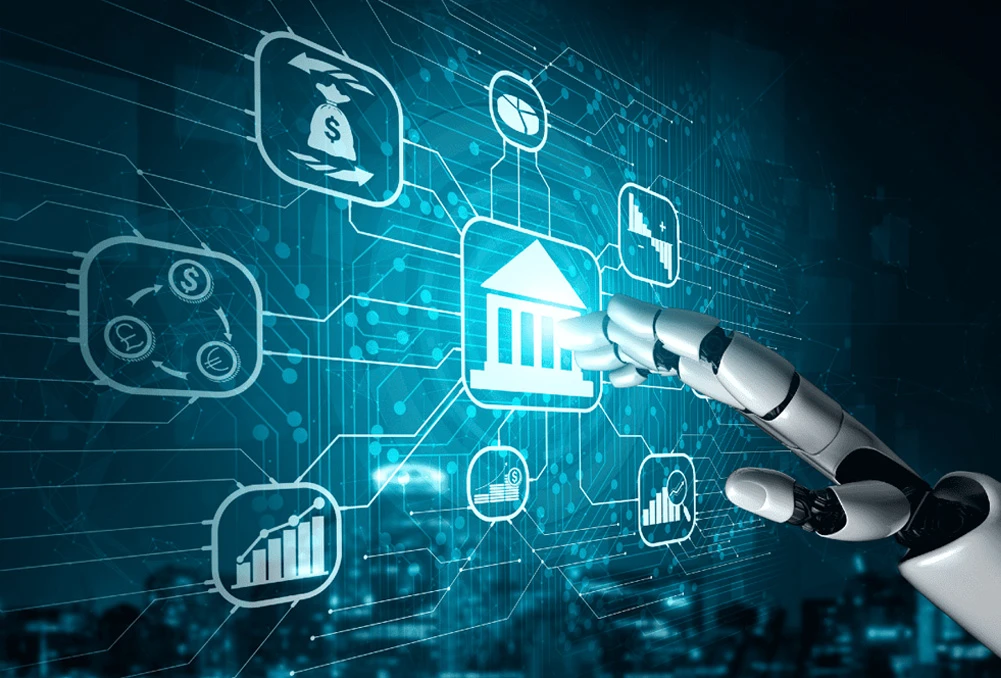
A practical view of how autonomous, adaptive AI can support customer service, fraud detection, risk assessment, claims, underwriting and customer engagement.
Read the complete article
Four recurring implementation challenges—and practical ways to align expectations, human judgment, opportunity discovery and data quality.
Read the complete article
Five lessons from automation programs about executive support, communication, milestones, opportunity assessment and the people at the center of change.
Read the complete article
A published examination of agentic AI, its distinction from traditional and generative systems, and the questions of governance, value and human oversight.
Read the complete article
A detailed comparison of the delivery services, integrations, operating models and selection factors across AWS and Azure DevOps.
Read the complete articleA complete banking automation paper on strategic discovery, benefit-cost analysis, executive sponsorship and the path from isolated pilots to an enterprise portfolio.
Read the complete articleA complete practitioner article on the operating, governance, workload and accountability patterns that determine whether data modernization creates lasting value.
Read the complete articlePublished work